
Anna Huynh of VietFive: Forging Rightful Presence for Chicago’s Underserved Communities

Anna Huynh
Co-Founder
VietFive
Anna Huynh is co-founder of VietFive Coffee, a Chicago-based coffee company that combines specialty coffee with workforce development. With nearly two decades of experience in education, Anna has dedicated her career to creating environments where people can learn, grow, and thrive, regardless of who they are. Today, her accessible workplace ideas are helping people with disabilities, justice-impacted individuals, and other underserved communities find reliable pathways to meaningful employment.
What is your role at VietFive?
My name is Anna, and alongside my husband Tuan, we own and manage VietFive. Our coffee story started more than 7 years ago. My husband’s family since 1975 were harvesting coffee and we started importing it here in the City in 2019. After importing and roasting the coffee for some time, we decided to open our first physical store in Chicago, which has changed our lives and the lives of many fellow Chicagoans.
Can you tell us about your early career and educational journey?
I've spent my entire working life in education. My first jobs were as a dance teacher and a tutor, which I started when I was 16.
After obtaining my degree in education, I worked as a teacher while running a nonprofit, and I later obtained two Master’s degrees that were also in special education and educational leadership.
Looking back, every step–from teaching and tutoring to leading classrooms and continuing my education– has shaped my work at VietFive.
How was VietFive founded?

The story of VietFive started in 2019, when my husband took his first trip back to Vietnam. Our uncle made him a cup of homegrown coffee from the coffee, which they’ve been growing for over 50 years. Tuan drank this coffee and thought, "Is anybody doing anything with this coffee?" When his uncle said no, that was when Tuan realized that we needed to bring the coffee to Chicago. We began by roasting it ourselves and selling packaged coffee online from our basement before opening our store four years ago.
What is “Rightful Presence”? What inspired you to develop this approach at VietFive?
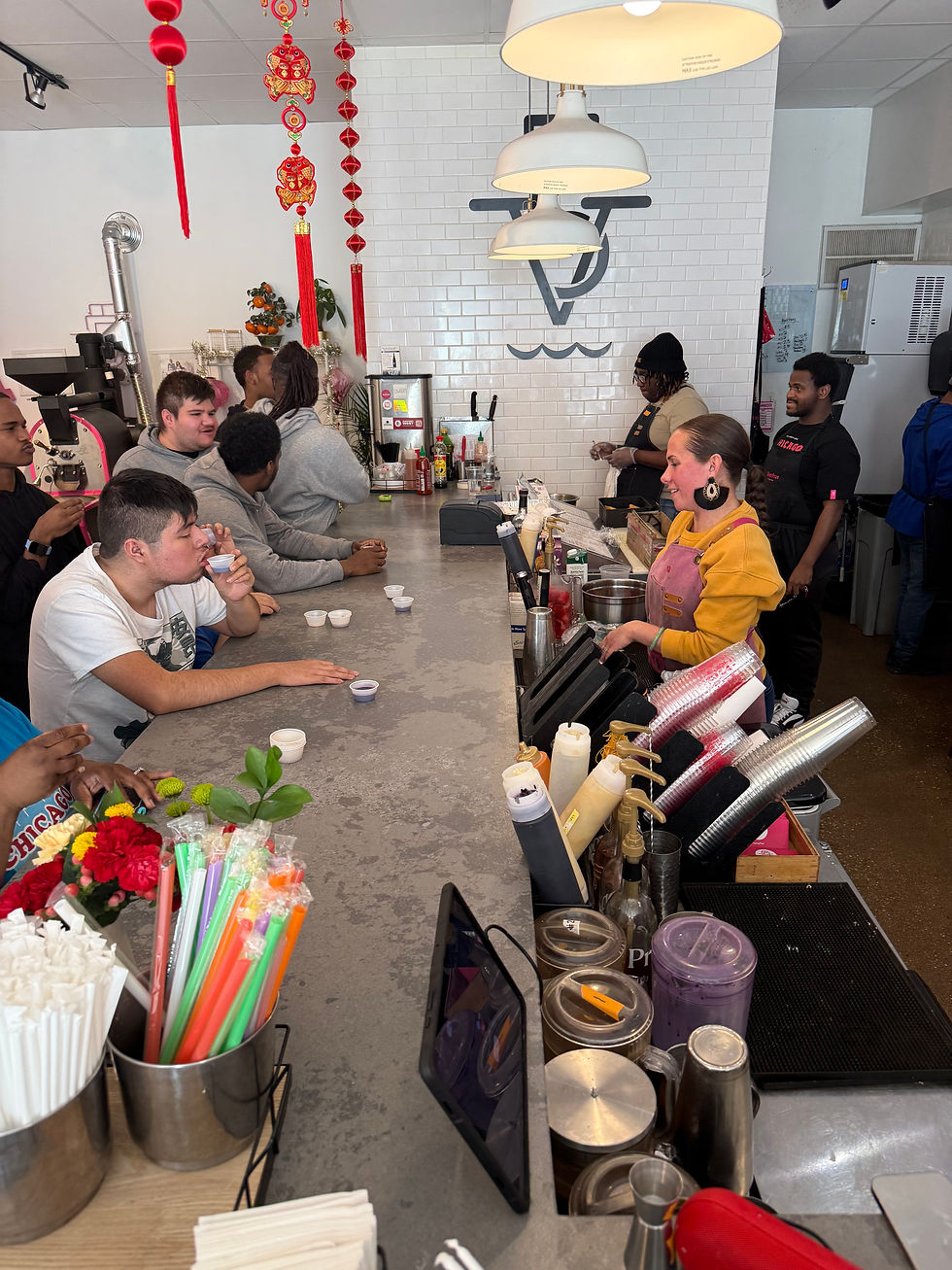
Rightful Presence is the most important work we're doing at VietFive. It means we've intentionally removed the invisible, unwritten, and unspoken barriers that can prevent people from fully participating in our coffee shop, both as customers and as staff. We started with the customer experience because those barriers are often easier to identify. We provide noise-cancelling headphones, core communication tools, movable furniture for guests using mobility equipment, and extensive staff training on accessible customer service. We also offer a non-verbal and non-reader menu that allows customers to order independently, Braille menus, and more visual menus for those who benefit from visual communication. On our website, we even have a social story that helps guests prepare for their visit by showing them what to expect before they arrive.
There isn't a single pathway for everyone; we evaluate each situation on a case-by-case basis and choose the approach that best supports the individual.
For our team members, Rightful Presence means redesigning the workplace so everyone has the opportunity to succeed and contribute. We've broken down every responsibility in the coffee shop into teachable skills and created customized weekly schedules that combine learning new tasks with practicing existing ones. Whether it's packaging wholesale coffee, stamping products, organizing inventory, preparing drinks, marinating meats, or making fresh food, every task becomes part of a structured learning journey. Through partnerships like Project Right Access and Chicago Youth Works, interns gradually increase both their responsibilities and their working hours, building confidence, stamina, and independence over time. We also recognize that contribution doesn't have to look the same for everyone. Not everyone needs to work seven- or eight-hour shifts to make a meaningful impact. A productive three-hour shift can significantly support the team while creating a workplace where every individual has the opportunity to grow, contribute, and prepare for long-term employment.
Who are some of your partners?
We partner with a variety of organizations across the region. Some of our other partners include the SGA Youth and Family Services, the Department of Rehabilitative Services, Commissioner Arfa and her team from MOPD, Chicago Public Schools Transitional Programs, and others. Our partnerships really enable us to develop strong internship programs that not only support us, but support Chicagoans from all walks of life.
What types of positions does VietFive offer?
It really depends on the individual. Some people interview with us and are hired directly onto our payroll. Others come through internship or workforce development programs. There isn't a single pathway for everyone; we evaluate each situation on a case-by-case basis and choose the approach that best supports the individual.
Positions at VietFive include baristas, food prep, and cashiers, and we teach our interns every aspect of the job. They all start out training on food and coffee, and then they switch until they have covered every aspect, including the cashier and customer service roles. We also have something we call "Open Kitchen" on Mondays where team members can reach out to either me or Tuan for training or skills they feel they need to learn, and this initiative is completely voluntary. We do this because we love to invest in people and encourage those that are interested in investing in themselves.
Right now, we have two full-time team members; everyone else is part-time. The attendant cost of medical benefits, among other benefits, makes it difficult to put anyone in a full-time role yet, but we've been working toward it. When we started our business, we were only able to pay our workers consistently but not ourselves. Now we are able to pay ourselves and afford healthcare; our next vision is to be able to bring people into salaried positions and cover their benefits.
How were accessible internships started?
We've been running accessible internships for about four summers now. From the beginning, the goal has always been to make the program accessible. In those cases, there may be funding available to support their training before they're hired permanently.
“We often say this is a crockpot, not a microwave. We wanted to build the program slowly, let it develop the right way, and gradually increase our capacity.”
About two years ago, we also introduced year-round internships because we were meeting so many great candidates that we simply couldn't accommodate everyone during the summer.
In the early years, we intentionally kept the program small, with just four interns each summer, so we could give every person the support and attention they deserved while we refined our approach. Now that we have a strong scheduling and training system in place, and we're preparing to open our second store, we've expanded to eight interns and are able to provide more organized, meaningful training.

What do internships typically look like?
The internship program is offered every summer, with the exact structure depending on the partner organization. The Chicago Youth Works internship runs for six weeks at 20 hours per week, while both the Department of Rehabilitative Services (DRS) and Project Right Access internships run for 10 weeks at 10 hours per week. Although the length varies, the overall programming is the same across each internship.
The program blends classroom learning with hands-on work rather than treating them as separate experiences. The scheduled internship hours include practical training, classroom instruction, and a 30-minute professional development workshop held every two weeks. Learning happens alongside the work, so interns build skills while contributing to the day-to-day operations of the business.
To structure the whole system, I draw experience from my time in the classroom, employing a learning station rotation model. This ensures that everyone spends their 4- or 5-hour shifts working through different tasks every 30 minutes.
What industry skills do interns develop?
During the internship, every participant earns a food handler license, which is required for working with the team. The internship is designed to prepare participants for long-term employment, whether at VietFive or elsewhere. For team members who join the staff permanently, there are additional opportunities to earn a food manager license for the State of Illinois, as well as specialty coffee certifications over time. Those credentials are part of a longer-term development pathway rather than the internship itself.
“We don’t believe someone’s background, disability, or past should limit them to entry-level roles forever. We’re committed to changing that by creating a workplace that invests in people and gives them real opportunities for growth and upward mobility.”
Beyond technical training, interns develop skills that transfer easily into food service, hospitality, and many other industries. They gain experience in customer service, time management, collaboration, meeting deadlines, working within organized systems, and balancing multiple responsibilities. Because they practice these skills week after week, many team members who move on from VietFive are successful in other workplaces and often grow into leadership positions.
Have you encountered any challenges in running this internship program? How did you overcome those challenges?
Financially, being a family-run small business in Chicago is always tough. In the early stages, capacity was one of our biggest challenges. We intentionally kept the internship program small, so we could learn what worked before expanding. We often say this is a crockpot, not a microwave. We wanted to build the program slowly, let it develop the right way, and gradually increase our capacity. Today, we have eight interns, the most we've ever had, but our scheduling, training structure, and staff support are all organized in a way that is manageable and sustainable.
The internship program is really a pipeline for long-term employment, so another ongoing challenge is funding and, more broadly, changing how employers think about accessible employment. Too many people with disabilities want to work but never get the opportunity because workplaces are designed around rigid job expectations instead of individual strengths and reasonable accommodations. We've seen talented people struggle to find employment, not because they lack ability, but because the system fails to make room for them.
We've addressed that challenge by redesigning our own workplace to be a Rightful Presence workplace. and sharing what we've learned with others. We provide accommodations and structured training that allow people to work independently and contribute meaningfully. We've also begun hosting businesses, nonprofits, and other organizations that want to build more accessible workplaces. They visit VietFive to see our accommodations, training methods, and approach to breaking work into teachable skills. Our goal is to help other employers move beyond good intentions and learn how to put Rightful Presence workplaces into practice.
What challenges do you face when finding applicants for these jobs?
We've actually been really blessed with the number of people who want to work here. When we opened applications for our accessible internship program in April through a simple Google Form, we received more than 60 applications from adults with disabilities within just 48 hours. The response reinforced what we've believed all along: there are many capable people who want to work; they simply need opportunities that are accessible.
Does VietFive serve any other communities?
We run a program called Grounds to Greatness that helps justice-impacted individuals build upward mobility after their release from prison. The program goes beyond employment by providing opportunities to earn professional certifications and develop long-term career skills.
For team members who want to pursue leadership in the food and beverage industry, we cover the cost of coaching, management training, and certifications so they can qualify for manager roles, whether at VietFive or elsewhere. We also support specialty coffee certifications, including certified roaster and certified barista credentials. The coffee industry highly respects these certifications, and this could help level out the playing field.
We don't believe someone's background, disability, or past should limit their opportunities for meaningful work forever. The current system often creates barriers, particularly for people with disabilities and those impacted by the justice system who are rebuilding their lives. We're committed to changing that by creating a Rightful Presence workplace that invests in people and gives them real opportunities for growth and upward mobility.
What significant challenges is VietFive facing at this moment?
Funding for accessible internships is readily available for individuals aged 24 and under, but once someone is older than that, those opportunities become much more limited. For a small business, hiring someone directly onto payroll with benefits before knowing whether the role is the right fit can be financially difficult. A funded internship allows employers to focus on training, performance, and the accommodations needed to help someone succeed long-term.
“We’ve seen talented people struggle to find employment, not because they lack ability, but because the system fails to make room for them.”
We're continuing to seek resources and partnerships on expanding these kinds of solutions because our goal is to remove barriers, making it easier for more small businesses to become work sites and create meaningful employment opportunities for people with disabilities.
What have been keys to your success?
One of the biggest keys to our success has been the people who've believed in our vision and mission at VietFive. Whether it's our commitment to accessible hiring or justice-impacted hiring, we've been fortunate to have people come alongside us at different stages of the journey. They've provided valuable insight, filled gaps in our knowledge and expertise, and connected us with opportunities we wouldn't have found on our own.
We're not looking for handouts, we’re just looking to sell more coffee. The more coffee we sell, the more jobs we can create for great people like those at VietFive. That shared belief in our mission, combined with the support of the right partners, has been a major driver of our success.

What is VietFive looking to achieve in the future?
One of our biggest goals is to simply scale the business. Our team is constantly looking to build its wholesale relationships because doing so helps us create even more great jobs for great people.
*Editor’s note: As of the time of publication, contact anna@vietfive.com to get in touch about Rightful Presence. To learn more about this small business, visit VietFive's website.
Interviewed by Megan Hannon in June, 2026 | Written by Shawn Wilson


